Is a Reverse Osmosis System Right for Your Arizona Home?
What Scottsdale and Phoenix homeowners should know about drinking water, desert minerals, and choosing treatment that fits their daily routine.
You fill your reusable bottle before heading out into the Arizona heat. The water is available, but you don’t love the taste. So you grab a bottled water instead.
Meanwhile, there’s white buildup around the kitchen faucet, spots on your glasses, and a water softener in the garage that you thought was supposed to handle all of this.
Does your home need reverse osmosis, too?
The answer starts with understanding what you want to improve. For Arizona homeowners, drinking-water preferences and whole-home hard-water problems often overlap. But they do not necessarily need the same solution.
Why Arizona Water Makes This Conversation Different
As water travels through soil and rock, it picks up dissolved minerals. Scottsdale identifies naturally occurring calcium and magnesium as the source of its water hardness and notes that hardness varies across the city. Those minerals can create aesthetic and maintenance concerns without making hardness itself a health risk. scottsdaleaz.gov
That distinction matters. Wanting different-tasting drinking water does not mean your municipal water is unsafe. It means you may prefer additional treatment for a specific purpose.
It also means your neighbor’s equipment is not automatically the right choice for your house. Your water provider, incoming water conditions, existing treatment, and household habits all belong in the conversation.
For one family, the priority is filling drinking bottles at the kitchen sink. For another, it is addressing scale throughout the house. Some households want both.
What Reverse Osmosis Actually Does
A reverse osmosis system uses water pressure to move water through a semipermeable membrane. It produces a treated-water stream and a separate stream that carries away rejected substances. A typical under-sink system treats water at a dedicated drinking-water location rather than treating every fixture in the house. epa.gov
RO can reduce dissolved solids, including many dissolved minerals and salts. Depending on the complete system and its filters, it may also address particular taste, odor, or contaminant concerns.
The important words are depending on the system. Do not assume every RO unit reduces every substance. Match the equipment’s independently certified reduction claims to what you actually want to address. EPA’s product directory allows homeowners to compare certified treatment claims for WaterSense-labeled systems. US EPA
If chlorine taste is your only concern, another filtration approach may be sufficient. More treatment stages do not automatically mean a better fit.
The Arizona Impact: Water You Want to Refill
Think about how drinking water moves through your household.
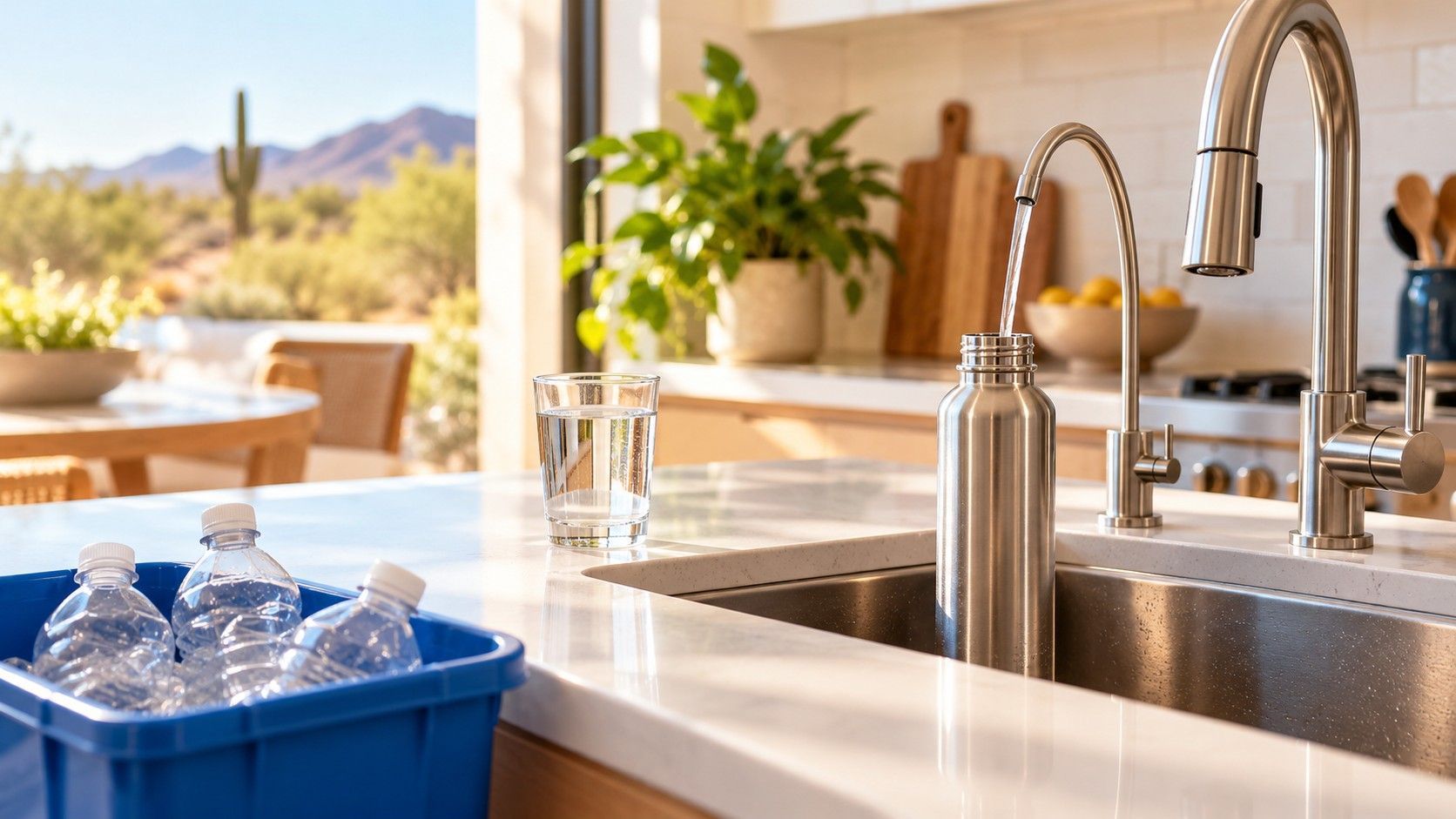
There are bottles packed for school, cups filled before a commute, pitchers set out for dinner, and water used for coffee, tea, and cooking. In an Arizona household where those routines repeat throughout the day, a convenient drinking-water tap can get plenty of use.
If you currently buy bottled water because you dislike the taste of your tap water, an appropriately selected RO system may make refilling at home more appealing. That can mean fewer cases to carry inside and fewer disposable bottles entering your household.
The benefit is practical: a drinking-water setup you enjoy using. It is not a promise that RO water hydrates you better than other safe drinking water.
And RO is not a refrigerator. If cold water is what makes you reach for a bottle during summer, plan for chilling it separately or discuss whether your refrigerator connection is compatible with the proposed system.
Why a Water Softener Does Not Replace an RO System
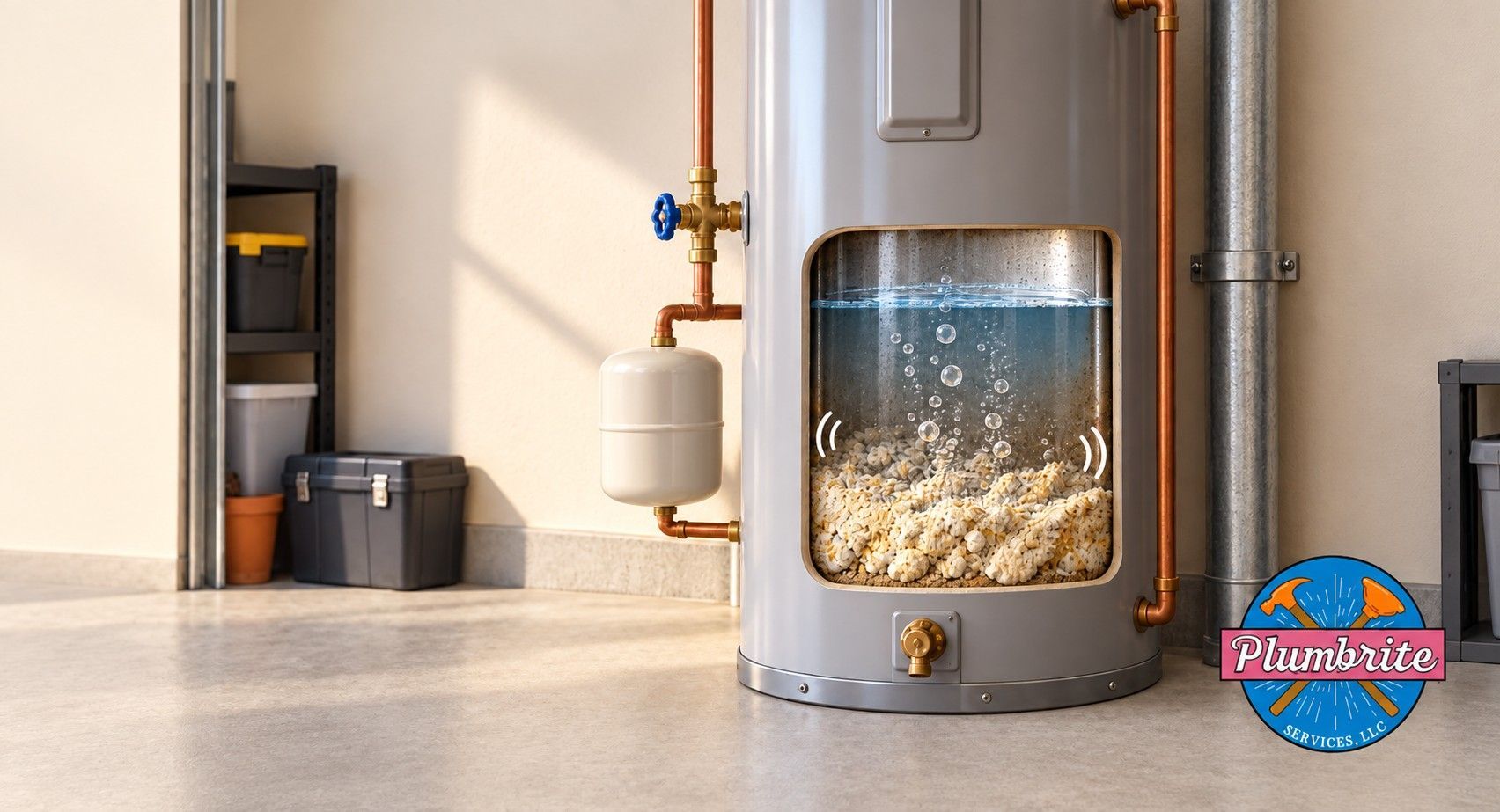
A traditional water softener addresses hardness minerals. An RO system addresses drinking water at the location it serves.
That is why a homeowner can have a softener and still want a different drinking-water setup. The two systems perform different jobs.
If your main frustration is mineral buildup on fixtures, laundry concerns, or water throughout the house, start with Plumbrite’s water softener options. If your goal is drinking water at the kitchen sink, an RO discussion may be more relevant.
An under-sink RO unit will not change the water going to your shower, washing machine, or every bathroom faucet. Pairing systems can make sense, but the recommendation should follow your needs rather than a one-size-fits-all package.
Water Efficiency Deserves Attention in the Desert
An RO system uses additional water during treatment. That belongs in the purchasing conversation, especially for Arizona homeowners who want to be thoughtful about water use.
EPA reports that typical point-of-use systems can send five gallons or more to the drain for each gallon of treated water produced. WaterSense-labeled models must meet a substantially more efficient threshold: no more than 2.3 gallons of reject water per gallon of treated water. Actual household performance depends on the equipment and operating conditions. US EPA
Before choosing a system, ask about its efficiency rating, production capacity, and requirements for incoming water pressure and quality. Compare the complete system rather than relying on a “high efficiency” label alone.
Treating drinking and cooking water at a specific tap also keeps the scope focused. You do not necessarily need RO-treated water for flushing toilets or watering landscaping.
Choose Around Your Kitchen and Your Household
The right system needs to fit more than an empty space under the sink.
A household that fills several large bottles each morning has different needs from someone who uses the tap for an occasional glass. Discuss storage capacity, refill speed, available cabinet space, and the amount of treated water you expect to use during busy periods.
Refrigerator and ice-maker connections deserve their own assessment. Available pressure, tubing distance, appliance requirements, and the RO system’s design can affect whether that connection is appropriate.
Plumbrite’s water filtration and treatment services start with the larger question: what are you trying to improve? That helps distinguish between RO, softening, other filtration, or a combination.
Plan for Maintenance Before Installation
An RO system needs ongoing care. Filters, membranes, and any storage components should be maintained according to the manufacturer’s instructions.
There is no single replacement schedule that fits every system and every Arizona home. Incoming water conditions, household use, and the equipment itself affect the maintenance requirements.
Ask what replacement filters cost, how service is handled, and which components need periodic attention. If you leave your Arizona home for an extended period, ask about the manufacturer’s shutdown and return-to-service instructions, too.
Knowing those details before installation makes it easier to compare the full ownership cost rather than just the initial price.
Let’s Find the Right Starting Point for Your Water
You do not have to choose between a softener, filtration, and reverse osmosis without understanding the differences.
Tell Plumbrite Services what you notice and what you want to change. Maybe it is drinking-water taste. Maybe it is buying fewer bottles. Maybe you want to address several concerns with a coordinated approach.
Contact Plumbrite Services to discuss reverse osmosis and water-treatment options for your Scottsdale, Phoenix, or surrounding-area home.
If you want it done right, call Plumbrite!
Frequently Asked Questions
Do all Arizona homes need reverse osmosis?
No. The decision depends on your water conditions and treatment goals. If your concern can be addressed with another filtration method, RO may not be necessary. Review your water provider’s current quality report and discuss any specific concerns before selecting equipment.
Will an under-sink RO system stop hard-water spots throughout my house?
No. It treats water at the tap or connections it serves. It does not soften the water reaching every shower, faucet, or appliance. Whole-home hardness concerns require a separate assessment.
Can I have reverse osmosis if I already have a water softener?
Yes, the systems can be used together when appropriately selected and installed. A softener addresses hardness, while RO provides additional treatment for drinking water. The proposed RO system’s incoming-water requirements should guide the setup.
Can reverse osmosis supply my refrigerator and ice maker?
Sometimes. Compatibility depends on the RO equipment, available pressure, plumbing layout, and refrigerator requirements. Have the connection evaluated rather than assuming every under-sink system can supply every refrigerator.
Does reverse osmosis remove everything from water?
No. Treatment capabilities vary. Check the specific system’s certified reduction claims and maintain it as directed. A lower total dissolved solids reading alone does not establish that every potential contaminant has been removed.