Your Recycling Bin Called. It’s Tired of Water Bottles.
How the right home water filtration setup can help you buy fewer disposable bottles and make refilling part of your routine.
You pick up another case of bottled water at the store. Carry it to the car. Haul it into the house. Find somewhere to stack it. A few days later, the recycling bin is filling up, and bottled water is back on the shopping list.
It’s a familiar routine, especially when everyone in the house grabs a bottle before heading to work, school, or practice.
But what if your kitchen faucet became the place you wanted to fill up?
Whole home filtration or a dedicated drinking water system can be part of that change. When the equipment addresses what you dislike about your water, reaching for a reusable bottle may become easier. And every disposable bottle you stop buying is one less bottle entering your household’s waste stream.
The Best Bottle to Recycle Is the One You Didn’t Need
Recycling is a useful habit. Reducing the amount of packaging you bring home takes that habit a step further.
The U.S. Environmental Protection Agency recommends using a water filter and refilling bottles instead of buying bottled water as one way to reduce plastic waste. The idea is straightforward: use the water available at home, put it in a reusable container, and repeat. US EPA
That doesn’t require an all-or-nothing commitment. You might start by replacing the bottles your family drinks at home, then make refilling part of the morning routine.
The goal is a manageable change you can keep making.
Four Bottles a Day Can Become 1,460 Bottles a Year
Small habits can produce surprisingly large totals.
Consider a household that uses four disposable water bottles each day. That adds up to 28 bottles a week and 1,460 bottles over a 365-day year.
If that household replaces those daily bottles with refills, it could avoid buying those 1,460 disposable bottles. This is an example based on a stated daily habit, not a prediction for every household.
Think about your own routine. How many bottles go into lunch bags? How many get opened at dinner? How often does someone grab one simply because it is cold and convenient?
You don’t need a complicated calculation to recognize an opportunity. Sometimes the evidence is already sitting in your recycling bin.
Start With Why You Buy Bottled Water
For some households, bottled water is primarily about convenience. For others, it is about the taste or smell of their tap water.
Those are different concerns, and the right solution starts with understanding yours.
Certain filters can improve taste and odor, but their performance depends on the filter and what is present in the water. Taste alone also does not establish whether water is safe to drink. Reviewing your utility’s water quality report and identifying any specific concerns helps guide the equipment choice. CDC
Plumbrite’s water filtration and treatment options are designed around that conversation: what do you want to improve, and which system actually addresses it?
Buying equipment first and asking those questions afterward can leave you with a system that doesn’t solve the reason you keep buying bottles.
Whole Home Filtration and Drinking Water Filtration Have Different Jobs
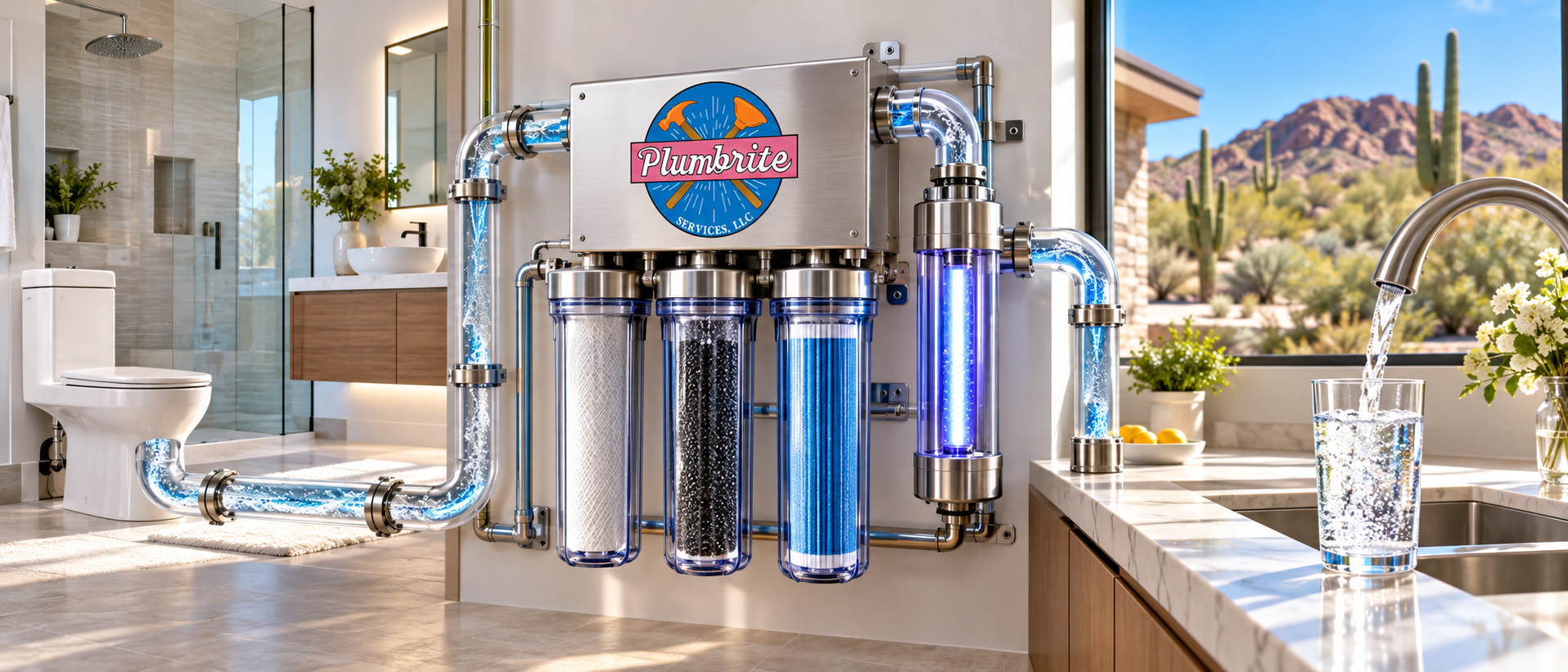
A whole home filtration system treats incoming water before it reaches fixtures throughout the house. A point-of-use system treats water at a particular location, such as the kitchen sink.
If your main goal is replacing bottled drinking water, a dedicated drinking water filter may be the appropriate starting point. If you also want to address water concerns throughout the house, whole home filtration may be worth exploring. Some households use both. CDC
Water softening is another distinct process. A traditional softener addresses hardness minerals; it should not be assumed to provide the same treatment as a drinking water filter.
Plumbrite can explain these differences and help you compare options. The purpose is to match the equipment to your household’s needs, whether that means whole home filtration, reverse osmosis, softening, or a combination.
Make Refilling as Easy as Grabbing a Bottle
A filtration system supports the change. Your daily routine makes it happen.
Keep clean reusable bottles where you can reach them. Fill them before the morning rush. If cold water is what makes bottled water appealing, keep a covered pitcher in the refrigerator. Give each family member a bottle they enjoy using and can easily clean.
These simple adjustments remove the little inconveniences that send you back to another case of disposable bottles.
There can be practical benefits, too: fewer cases to carry, less space devoted to storing them, and fewer empties to collect around the house.
Less Plastic Is a Useful Goal, but the System Still Matters
A water treatment system has maintenance needs of its own. Filters and other components may require replacement, and some treatment technologies use additional water during operation.
That is why this conversation should focus on reducing disposable bottle use rather than promising that every system has the same environmental footprint.
Ask about replacement schedules, operating water use, and ongoing costs before choosing equipment. Follow the manufacturer’s maintenance instructions so the system continues performing as intended. CDC
The most useful upgrade is one that suits your water, your priorities, and the routine you want to build.
Give Your Recycling Bin a Little Breathing Room
If bottled water has become a permanent item on your shopping list, it may be time to explore another approach.
Plumbrite Services provides professional plumbing and water treatment installation and can help you understand which filtration options fit your home.
Contact Plumbrite Services or call 602-704-0549 to discuss your water concerns and goals.
Your recycling bin might appreciate the break. Your grocery-carrying arms probably will, too.
Frequently Asked Questions
Can home water filtration help reduce plastic bottle waste?
Yes, when it helps your household replace disposable bottled water with filtered tap water in reusable containers. The reduction depends on how many bottles you currently buy and how consistently you switch to refilling. Installing equipment alone does not change the amount of packaging you use.
Do I need whole home filtration to stop buying bottled water?
Not necessarily. If drinking and cooking water are your main priorities, a point-of-use filter may meet your needs. Whole home filtration treats incoming water for broader household use. The appropriate choice depends on your water quality concerns and what you want the system to accomplish.
Will every whole home filter remove the same substances?
No. Different filtration technologies address different substances. Check the specific product’s certified reduction claims rather than assuming “whole home” means it removes everything. Plumbrite can help explain the capabilities and maintenance requirements of the equipment you are considering.
Does reducing bottle waste mean a filtration system saves water, too?
Those are separate questions. Replacing disposable bottles reduces the number of bottles you buy, but a treatment system’s water use depends on its design. Some systems use water for flushing, backwashing, or treatment. Ask about the specific equipment’s operating requirements before making a water-saving claim.